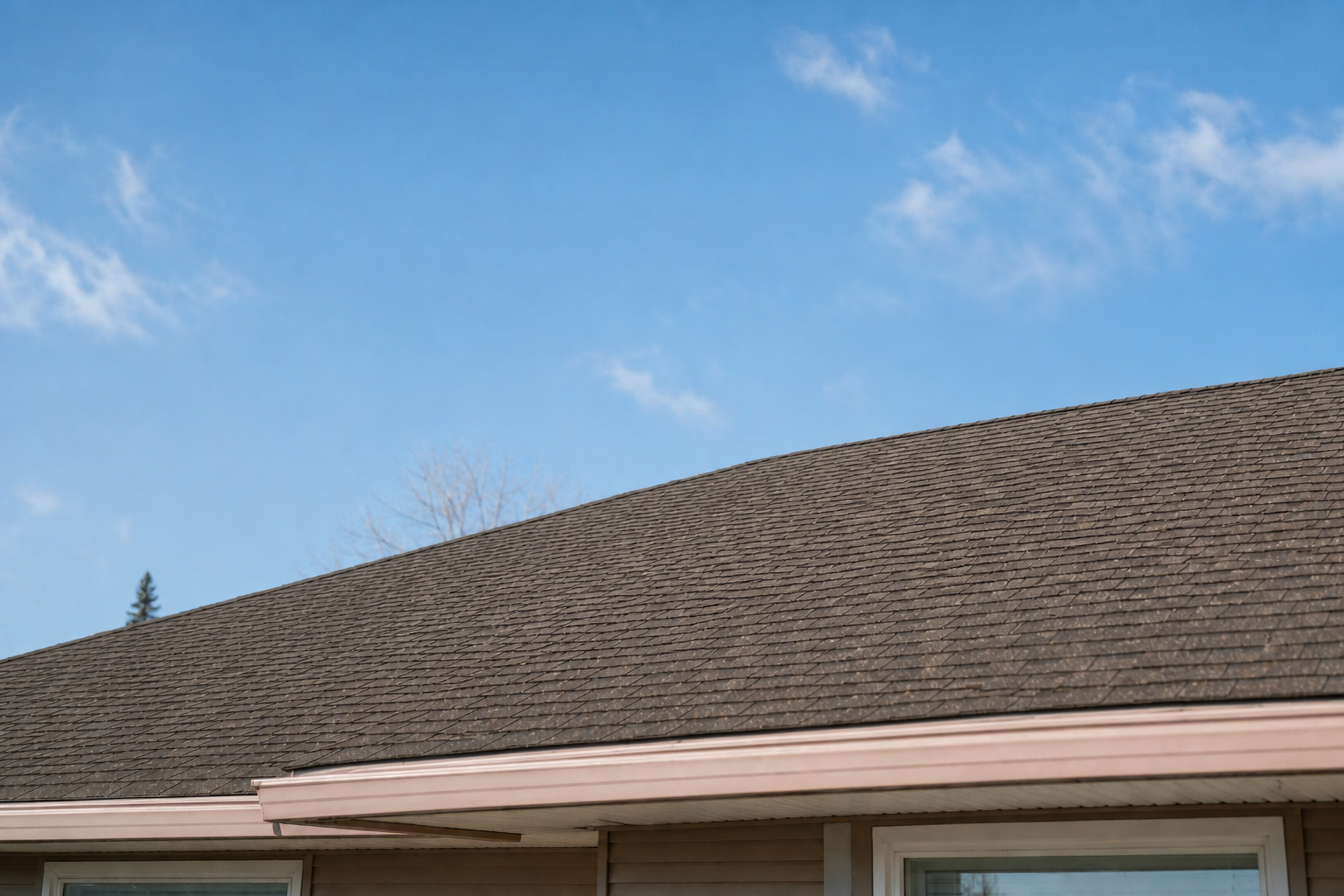
What we look at first
We start at the hangers, not the trough. A gutter can look straight and clean while every third hanger has already pulled loose from the fascia, and once enough of them let go the whole run starts to sag in the middle where water collects instead of running toward the downspout. We walk the full length and press on the outer lip every few feet, since a flexing section is telling us something a ground check never will.
Seams get checked next. Older runs were often built from shorter sections joined every ten feet, and those joints are where a slow leak usually starts long before the metal itself fails anywhere else.
A clog and a slope problem look the same from the yard
Standing water days after the last rain almost always means the slope is wrong rather than the run being blocked. A gutter has to drop a small amount toward each downspout, and once a fascia board sags even slightly, that pitch disappears and water sits there until it overflows in the next storm.
We clear debris first no matter what, since a genuinely clogged run can mimic a slope problem until it is empty and we can watch how it actually drains.
What we check on the fascia while we are up there
A gutter rarely fails without telling on the board behind it. Soft or discolored fascia usually means water has been getting behind the gutter for a while, and that same moisture often shows up as a stain just below the drip edge. We probe suspect boards with a screwdriver rather than guessing from color, since paint hides rot for years on a board that looks fine.
This is also where a roofing background changes what we notice compared to a gutter only crew, since we are already thinking about how water moves off the roof edge.
How we actually decide repair versus replacement
Age and material matter more than the visible damage in a lot of cases. A ten year old aluminum system with one bent section and a couple of loose hangers is almost always a repair, while a run with multiple soft fascia boards and seams separated in more than one place usually costs more to patch piece by piece than to replace outright.
We show you each problem area before we recommend either path, rather than handing you one number and asking you to trust it.
What a replacement day looks like
Most single story homes are done in one working day once the old system is off the wall, since new hangers, seamless runs and downspouts go up faster than the diagnosis did. Two story sections push into a second day, and we tell you which one to expect before the ladders come off the truck rather than partway through the afternoon.